Understanding Your Skin Biopsy Pathology Report

Key Facts About Pathology Reports
- Several weeks is the typical turnaround time for skin biopsy results in Israel
- Breslow depth is the single most important prognostic factor in melanoma staging
- Clear margins mean no cancer cells were found at the edges of the removed tissue
- 95-99% cure rates are achieved when skin cancers are detected and fully removed at an early stage
- Second opinions are recommended for any diagnosis that is uncertain, unexpected, or would change your treatment significantly
What a Pathology Report Is and Why It Matters
A pathology report is the official medical document that describes what the dermatopathologist found when examining your skin biopsy tissue under a microscope. This report is the single most important factor in determining your treatment plan. It tells your dermatologist whether a lesion is benign, precancerous, or malignant, and it provides the specific details needed to decide what happens next.
Unlike a clinical examination, where your doctor evaluates a lesion based on its appearance, a pathology report provides a definitive cellular-level diagnosis. Two spots that look similar on the surface may turn out to be entirely different conditions under the microscope.
If you have recently had a skin biopsy, understanding your report can help you have a more informed conversation with your doctor about next steps.
“A pathology report is the foundation of every treatment decision in skin cancer care. When patients understand what their report actually says, they become active partners in choosing the right next step, whether that is monitoring, re-excision, or Mohs surgery.”
Benign, Atypical, and Malignant: The Three Main Categories
Every pathology report places your biopsy result into one of three broad categories, and each one carries different implications for your care.
Benign means the cells are normal or represent a non-cancerous growth, such as seborrheic keratoses, dermatofibromas, ordinary moles (melanocytic nevi), or cysts. A benign result typically means no further treatment is required.
Atypical (also called dysplastic) means the cells show abnormal features but do not meet the criteria for cancer. A report might describe a "dysplastic nevus with mild atypia" or "moderate atypia." Mild atypia usually requires only routine monitoring. Moderate to severe atypia may prompt re-excision, because severely atypical cells can occasionally progress to melanoma.
Malignant means cancer cells are present. The report will specify the type of skin cancer and critical details that guide treatment. The most common skin cancers are basal cell carcinoma (BCC), squamous cell carcinoma (SCC), and melanoma.
Histologic Type: Identifying the Specific Cancer
When a biopsy is malignant, the pathology report identifies the exact histologic type. This matters because different subtypes behave differently and require different treatment approaches.
Basal Cell Carcinoma (BCC) Subtypes
BCC is the most common skin cancer, and it comes in several subtypes with distinct growth patterns.
Nodular BCC is the most frequent subtype. It grows as a well-defined mass, is generally lower risk, and responds well to standard excision or Mohs surgery.
Superficial BCC grows horizontally within the upper skin layers rather than invading deeply. Treatment may include topical therapies for very thin lesions, though surgical removal is more reliable.
Infiltrative BCC sends irregular tumor strands into surrounding tissue, making borders difficult to define. Mohs surgery is often recommended because of the higher risk of incomplete removal with standard excision.
Morpheaform (sclerosing) BCC is the most aggressive common subtype, growing in thin cords embedded within dense scar-like tissue. Mohs surgery is strongly recommended because real-time margin assessment is essential to trace its invisible extensions.
Squamous Cell Carcinoma (SCC) Differentiation
SCC is graded by how closely the cancer cells resemble normal squamous cells.
Well-differentiated SCC cells still resemble normal skin cells. These tumors grow more slowly and have a lower risk of spreading. Moderately differentiated SCC shows increasingly disorganized cells with an intermediate risk profile. Poorly differentiated SCC cells bear little resemblance to normal skin, carrying the highest risk of recurrence and metastasis, and typically requiring Mohs surgery and close follow-up.
Margins: The Most Actionable Part of Your Report
Margin status is often the most immediately relevant section of a pathology report because it directly determines whether additional surgery is needed. Margins refer to the edges of the tissue that was removed.
Clear margins (also called negative margins) mean no cancer cells were found at the edges of the specimen. The tumor appears to have been completely removed. When margins are clear, no additional surgery is typically needed for that specific lesion.
Positive margins mean cancer cells extend to the edge of the removed tissue, indicating that tumor likely remains in the body. Positive margins almost always lead to a recommendation for additional surgery, either a re-excision with wider margins or Mohs surgery for precise margin control.
Close margins mean no cancer cells touch the edge, but they come within a small distance (often less than 1mm). Your doctor may recommend re-excision or close monitoring depending on tumor type and location.
Standard biopsy pathology examines only a sampling of the margins. Mohs surgery, which examines 100% of the surgical margin in real time, provides the highest cure rates for skin cancers in cosmetically and functionally important areas.
Breslow Depth: The Key Measurement in Melanoma
Breslow depth is the most important prognostic measurement in melanoma. It measures the thickness of the melanoma in millimeters, from the top of the epidermis (the granular layer) down to the deepest point of tumor invasion.
The thinner the melanoma, the better the prognosis. Current staging guidelines use these general thresholds:
- Less than 1.0 mm (thin melanoma): Excellent prognosis. Five-year survival rates exceed 95% in most cases. Treatment is typically wide local excision with 1 cm margins.
- 1.01-2.0 mm: Intermediate thickness. Sentinel lymph node biopsy is usually discussed. Excision margins widen to 1-2 cm.
- 2.01-4.0 mm: Thicker melanoma with a higher risk of lymph node involvement. Sentinel lymph node biopsy is recommended. Further treatment may be needed based on staging results.
- Greater than 4.0 mm: The highest risk category. Sentinel lymph node biopsy and systemic imaging are standard parts of the workup.
Even a fraction of a millimeter can shift a melanoma from one stage to another, which is why Breslow depth is reported with precision.
Clark Level: An Older Measurement You May Still See
Clark level describes melanoma invasion depth based on anatomical skin layers (Level I through V), ranging from epidermis-only (in situ) to subcutaneous fat invasion. It has largely been replaced by Breslow depth because millimeter thickness is more reproducible and predicts outcomes more accurately. However, Clark level still appears in many pathology reports and may be relevant for very thin melanomas (less than 1 mm), where the anatomical depth of invasion can influence sentinel node biopsy decisions.
Prognostic Factors Beyond the Basic Diagnosis
Several additional features in a pathology report provide information about how aggressively a tumor may behave.
Ulceration refers to a breakdown of the skin surface overlying the tumor. In melanoma, ulceration is an independent negative prognostic factor - an ulcerated melanoma carries a worse prognosis than a non-ulcerated one of the same thickness. Its presence directly affects staging.
Mitotic rate measures how rapidly tumor cells are dividing, reported as mitoses per square millimeter. A higher rate indicates more aggressive disease. While removed as a formal T-staging criterion in the current AJCC system, it remains an important prognostic indicator.
Perineural invasion means tumor cells are growing along or around nerve fibers. This is particularly significant in SCC, indicating higher risk of recurrence and regional spread. It often shifts treatment toward Mohs surgery and closer surveillance.
What Happens Next Based on Your Results
Your pathology report directly dictates the recommended next steps. Here is what to expect for the most common scenarios.
Benign result: In most cases, no further treatment is needed. Your doctor may recommend periodic skin checks, particularly if you have risk factors for skin cancer or a history of atypical moles.
Positive or close margins: A re-excision is typically recommended to remove any remaining cancer cells. For tumors on the face, ears, nose, or other areas where tissue conservation matters, Mohs surgery offers the advantage of removing only what is necessary while confirming complete clearance.
Aggressive histologic subtype (infiltrative BCC, morpheaform BCC, poorly differentiated SCC): These subtypes have a higher risk of extending beyond clinically visible borders. Mohs surgery is often the preferred treatment because it provides real-time, complete margin assessment that standard excision cannot match.
Melanoma: Treatment depends on staging determined by Breslow depth, ulceration, and other factors. Thin melanomas may require only wide excision. Thicker melanomas typically need sentinel lymph node biopsy to check for microscopic spread, followed by wide excision and potentially adjuvant therapy. Your dermatologist may refer you to a multidisciplinary oncology team for higher-risk melanomas.
Common Phrases Decoded
Pathology reports use standardized medical language that can be confusing. Here are some frequently seen phrases and what they mean in plain terms.
"Dysplastic nevus with moderate atypia" - This is a mole with moderately abnormal-looking cells. It is not cancer, but your doctor may want to remove it completely if it was only partially biopsied, and will likely recommend monitoring for any changes.
"Superficial BCC, margins involved" - A basal cell carcinoma of the superficial subtype was found, and cancer cells reach the edge of the biopsy sample. Additional treatment is needed to remove the remaining tumor. Options include standard re-excision or Mohs surgery.
"Well-differentiated SCC, clear margins, no perineural invasion" - A squamous cell carcinoma that is lower risk on multiple counts: the cells are well-differentiated, the tumor was completely removed, and there is no nerve involvement. This is a favorable report, though regular follow-up is still important.
"Melanoma in situ" - Melanoma cells are present but confined entirely to the epidermis with no invasion into the dermis. This is the earliest possible stage of melanoma. Treatment is excision with appropriate margins, and the prognosis is excellent.
"Breslow 0.8 mm, no ulceration, mitotic rate 1/mm2" - A thin melanoma with favorable prognostic features. Treatment typically involves wide local excision with 1 cm margins. Sentinel lymph node biopsy is often not required at this thickness without ulceration.
How Long Results Take
In Israel, skin biopsy pathology results typically take several weeks, depending on the laboratory and case complexity. Simple biopsies of common lesions tend to return faster, while cases requiring additional staining or immunohistochemistry may take longer. A longer wait does not necessarily mean something is wrong - laboratories sometimes need extra tests to reach a precise diagnosis.
For guidance on managing the waiting period, see Waiting for Biopsy Results: What to Expect.
When to Ask for a Second Pathology Opinion
A second pathology opinion involves having your biopsy slides reviewed by a different dermatopathologist. This is a standard and accepted practice in medicine, not a sign of distrust toward your doctor. Consider requesting a second opinion in the following situations:
- The pathologist's diagnosis is uncertain or described as "borderline"
- The diagnosis does not match the clinical picture
- The findings would lead to significant surgery or systemic treatment
- You were seen at a general laboratory and want review by a specialist dermatopathologist
Your dermatologist can arrange for the original slides to be sent to another pathologist. In Israel, several academic medical centers have dermatopathology specialists who provide second opinions.
Frequently Asked Questions
What does it mean if my report says "pending additional stains"?
Additional stains (immunohistochemistry) are special laboratory techniques used to help identify specific cell types or markers. The pathologist may need these extra tests to distinguish between similar-looking conditions or to confirm a diagnosis. This is a routine part of the diagnostic process and does not automatically indicate a more serious finding.
Can a benign biopsy result be wrong?
Pathology is highly accurate, but no diagnostic test is perfect. If a lesion called benign continues to grow or change, your dermatologist may recommend a repeat biopsy. Clinical follow-up remains important even after a benign result.
What is the difference between "excisional margins" and "biopsy margins"?
A biopsy removes only a tissue sample for diagnosis; margin assessment on a small biopsy has limited meaning. An excision removes the entire lesion, and its margin status tells you whether removal was complete.
My report mentions "solar elastosis" - is that cancer?
Solar elastosis is not cancer. It refers to sun damage in the dermis, where chronic UV exposure has degraded the collagen and elastic fibers. It is a common incidental finding in biopsies from sun-exposed skin and indicates cumulative sun damage, which is a risk factor for skin cancer but is not itself a malignant process.
Should I keep a copy of my pathology report?
Yes. Keeping copies of all your pathology reports creates a personal medical record that is valuable for future reference. If you see a new doctor, seek a second opinion, or develop a new lesion in the same area years later, having your previous reports available provides important context.
How often should I have skin checks after a positive biopsy?
After a non-melanoma skin cancer (BCC or SCC), dermatologists typically recommend exams every 6 to 12 months for at least 5 years. After melanoma, follow-up is more frequent - often every 3 to 6 months for the first 2 to 3 years, then annually. Your doctor will tailor the schedule to your specific situation.
Sources & References
- Gershenwald JE, Scolyer RA. (2018). Melanoma Staging: American Joint Committee on Cancer (AJCC) 8th Edition and Beyond. Ann Surg Oncol, 25(8):2105-2110. [Link]
- Breslow A. (1970). Thickness, Cross-Sectional Areas and Depth of Invasion in the Prognosis of Cutaneous Melanoma. Ann Surg, 172(5):902-908. [Link]
- Cameron MC et al. (2019). Basal Cell Carcinoma: Contemporary Approaches to Diagnosis, Treatment, and Prevention. J Am Acad Dermatol, 80(2):321-339. [Link]
- Tolkachjov SN et al. (2017). Understanding Mohs Micrographic Surgery: A Review and Practical Guide for the Nondermatologist. Mayo Clin Proc, 92(8):1261-1271. [Link]
- Swetter SM et al. (2019). Guidelines of Care for the Management of Primary Cutaneous Melanoma. J Am Acad Dermatol, 80(1):208-250. [Link]
Medical Disclaimer
This article is for informational purposes only and does not constitute medical advice. Always consult a qualified dermatologist for diagnosis and treatment. The information provided should not be used for self-diagnosis or as a substitute for professional medical care.
About the Author
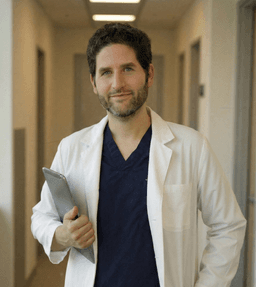
M.D., Dermatologic Surgery & Mohs Specialist, ACMS Fellow
Dr. Yehonatan Kaplan is a dermatology specialist with a US-trained fellowship in Mohs micrographic surgery and dermatologic oncology. He is a Fellow of the American College of Mohs Surgery (ACMS) and a member of the ASDS, with experience in over 6,000 Mohs procedures.
Medically reviewed on April 22, 2026
Related Articles
Digital Dermoscopy and AI: The Revolution in Early Skin Cancer Diagnosis
How digital dermoscopy with up to 140x magnification, combined with FotoFinder's AIMEE AI system, is transforming skin cancer diagnosis and improving Mohs surgery outcomes.
Read More →DiagnosisSkin Cancer Screening: What Happens During a Full-Body Skin Check
A full-body skin cancer screening is one of the most effective ways to detect BCC and SCC early. Learn what to expect during the examination, how often you should be screened, and how dermoscopy enhances the process.
Read More →DiagnosisWhat Is Dermoscopy? How Dermatologists See What the Naked Eye Cannot
Dermoscopy is a non-invasive technique that allows dermatologists to see structures beneath the skin's surface. Learn how this powerful tool helps detect BCC and SCC earlier and more accurately.
Read More →