Digital Dermoscopy and AI: The Revolution in Early Skin Cancer Diagnosis

Skin cancer is the most common malignancy in the Western world, and Israel is no exception. Every year, thousands of new cases of BCC (Basal Cell Carcinoma) and SCC (Squamous Cell Carcinoma) are diagnosed, alongside cases of melanoma, a tumor that can be fatal if not caught early. The key to saving lives and minimizing the extent of surgery is early, accurate diagnosis, and this is precisely where dermoscopy enters the picture.
What Is Dermoscopy?
Dermoscopy is a non-invasive examination method that allows the dermatologist to view skin lesions under magnification with specialized lighting, beyond what the naked eye can see. Using a device called a dermatoscope, the physician obtains a magnified image of the lesion's internal structures: pigment patterns, vascular structures, and tissue architecture that lie beneath the skin surface.
The examination serves as a critical bridge between visual clinical examination and biopsy with pathological analysis. It enables the dermatologist to determine with greater precision which lesions require biopsy and which can be safely monitored. This reduces unnecessary biopsies on one hand, while identifying suspicious lesions that may appear innocent to the naked eye on the other.
Why Is Dermoscopy Essential for Skin Cancer Diagnosis?
Enhanced Diagnostic Accuracy
Studies show that dermoscopy increases the diagnostic sensitivity for melanoma by 10–30% compared to clinical examination alone. This means that malignant lesions that might otherwise be missed are identified in time.
Precise Differential Diagnosis
Dermoscopy enables differentiation between lesion types that appear similar: BCC versus a benign lesion, early-stage SCC versus actinic keratosis, melanoma versus a dysplastic nevus, as well as lesions such as keratoacanthoma or dermatofibroma. Each such diagnosis directly impacts treatment planning: whether excision, biopsy, or monitoring alone is required.
A Key Tool in Mohs Surgery Planning
When it comes to Mohs surgery, the most precise surgical technique for skin cancer removal, dermoscopy plays an important role even before entering the operating room. It assists with:
- Tumor border mapping: More accurate identification of the lesion's extent, including subclinical extensions not visible to the naked eye
- Identifying suspicious margins: Marking areas where the tumor may extend beyond visible borders, guiding the initial surgical cut
- Reducing the number of surgical stages: The more precise the pre-operative mapping, the fewer excision stages required, maximizing preservation of healthy tissue, resulting in a smaller scar and shorter operative time
- Precise excision: Combining dermoscopic data with Mohs real-time histopathological examination enables unparalleled surgical precision
The Evolution of Dermoscopy Over the Years
First Generation: Analog Dermoscopy
Dermoscopy began as a simple analog method: a magnifying lens with illumination and immersion oil applied to the skin. Magnification was typically 10x, and the physician had to document findings manually. The method significantly improved diagnostic accuracy but had limitations: images could not be saved, compared over time, or easily shared with colleagues.
Second Generation: Digital Dermoscopy
The transition to digital dermoscopy changed the rules of the game. Dedicated high-magnification digital cameras, ranging from 20x to 140x and beyond, enable:
- Digital documentation of every lesion in high resolution
- Comparison over time (Sequential Dermoscopy): tracking minimal changes in a lesion's size, color, shape, and structure between visits
- Identification of fine structures not visible at standard magnification, such as atypical pigment networks, subtle vascular patterns, regression dots, and crystalline structures
- Specialist collaboration: sending images for a second opinion or multidisciplinary discussion
The greater the magnification, the earlier the morphological structures that can be detected. Digital dermoscopy therefore contributes directly to early skin cancer diagnosis, at a stage when surgery can be minimal and the prognosis is excellent.
Third Generation: AI-Integrated Dermoscopy
The most significant technological leap in recent years is the integration of artificial intelligence into the dermoscopic process. AI systems based on deep learning are trained on hundreds of thousands of labeled dermoscopic images and are capable of identifying patterns and structures objectively and consistently.
At our clinic, we integrate the FotoFinder AIMEE system, one of the world's leading platforms for digital dermoscopy and AI-powered skin analysis. The AIMEE system (Artificial Intelligence for Mole Expert Evaluation) analyzes each dermoscopic image and provides an automatic risk assessment for the lesion, a score based on algorithms validated in clinical studies.
What Does FotoFinder's AIMEE System Add to the Examination?
Automated Lesion Analysis
The system scans each dermoscopic lesion and identifies features such as asymmetry, color variation, atypical structures, and vascular patterns, then calculates a risk score that guides the dermatologist.
Consistency and Objectivity
Unlike the human eye, which can be affected by fatigue, the number of lesions examined that day, or cognitive biases, the AI system provides uniform and consistent analysis for every lesion.
A Digital Safety Net
AI does not replace the dermatologist's clinical judgment, but it serves as an additional protective layer. A lesion that the physician might classify as benign but the AI system flags as suspicious will receive closer examination and may be referred for biopsy. The result: fewer missed diagnoses, more early detections.
Smart Documentation and Monitoring
Every photographed lesion is saved in the patient's digital file, including the AI analysis, enabling automatic monitoring over time and comparing changes between visits with a precision that no human eye can match.
The Connection Between Digital Dermoscopy and Mohs Surgery
As a clinic specializing in Mohs surgery and advanced skin cancer diagnosis, the combination of digital dermoscopy and artificial intelligence is an integral part of our See & Treat approach, diagnosis and treatment in the same visit:
- Stage 1 - Initial Diagnosis: Digital dermoscopic examination of the lesion, including AI analysis
- Stage 2 - Clinical Decision: Whether the lesion requires biopsy, monitoring, removal, or Mohs surgery
- Stage 3 - Surgical Planning: Using dermoscopic data for precise mapping of tumor borders before Mohs surgery
- Stage 4 - Mohs Surgery: Precise excision with real-time pathological examination, until 100% clear margins are confirmed
- Stage 5 - Reconstruction: Immediate surgical closure in the same session
This complete sequence, from dermoscopic diagnosis through surgery and reconstruction, is performed by a single specialist (Dr. Kaplan, ACMS Fellow), ensuring continuity of care and optimal outcomes.
Frequently Asked Questions
What is dermoscopy and what is the difference between standard and digital dermoscopy?
Dermoscopy is a non-invasive examination of skin lesions under magnification. Standard (analog) dermoscopy offers 10x magnification without digital documentation. Digital dermoscopy provides magnifications from 20x to 140x, image documentation, and the ability to compare over time, a decisive advantage for early diagnosis.
Is a dermoscopy examination painful?
No. The examination is entirely non-invasive and involves no cutting, injection, or pain. The device is gently placed against the skin surface, and capturing the image takes only a few seconds.
What role does artificial intelligence play in dermoscopy?
An AI system like FotoFinder's AIMEE analyzes dermoscopic images and provides an automatic risk assessment. It identifies suspicious patterns that may indicate skin cancer and serves as an additional safety net. It does not replace the physician but rather functions as a support tool that enhances diagnostic accuracy.
What is Mohs surgery and when is it needed?
Mohs surgery is the most precise surgical technique for removing skin cancer, primarily BCC and SCC. The procedure is performed in stages: controlled excision, real-time microscopic examination of all margins, and repeating the process until 100% clear margins are achieved. The method is especially suited for sensitive areas such as the face, neck, and ears, where tissue preservation is critical.
How does dermoscopy improve Mohs surgery outcomes?
Precise dermoscopic mapping of tumor borders before surgery enables a more targeted initial excision. The result: fewer excision stages, maximum preservation of healthy tissue, a smaller scar, and a better cosmetic outcome.
Dr. Yehonatan Kaplan is a board-certified dermatologist with an ACMS Fellowship in Mohs surgery. The clinic is located in Petah Tikva, with surgical activity at Assuta and Herzliya Medical Center. If you are interested in a dermoscopic examination or consultation, contact us to schedule an appointment.
Sources & References
Medical Disclaimer
This article is for informational purposes only and does not constitute medical advice. Always consult a qualified dermatologist for diagnosis and treatment. The information provided should not be used for self-diagnosis or as a substitute for professional medical care.
About the Author
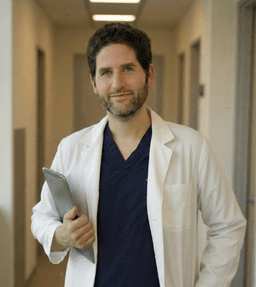
M.D., Dermatologic Surgery & Mohs Specialist, ACMS Fellow
Dr. Yehonatan Kaplan is a dermatology specialist with a US-trained fellowship in Mohs micrographic surgery and dermatologic oncology. He is a Fellow of the American College of Mohs Surgery (ACMS) and a member of the ASDS, with experience in over 6,000 Mohs procedures.
Medically reviewed on February 28, 2026
Related Articles
Skin Cancer Screening: What Happens During a Full-Body Skin Check
A full-body skin cancer screening is one of the most effective ways to detect BCC and SCC early. Learn what to expect during the examination, how often you should be screened, and how dermoscopy enhances the process.
Read More →DiagnosisWhat Is Dermoscopy? How Dermatologists See What the Naked Eye Cannot
Dermoscopy is a non-invasive technique that allows dermatologists to see structures beneath the skin's surface. Learn how this powerful tool helps detect BCC and SCC earlier and more accurately.
Read More →DiagnosisSkin Biopsy: Types, Pain, Results, and Everything You Need to Know
A skin biopsy is the definitive way to diagnose skin cancer. Learn about the three main types, what the procedure feels like, how long results take, and what your results mean for your treatment plan.
Read More →