The Quiet Stretch: Waiting for Biopsy Results

What Patients Say in Hindsight
- The wait is documented in the literature as the most stressful phase of the diagnostic journey, more than the visit or the procedure itself
- Proactive outreach from the team, without the patient having to ask, meaningfully changes how the period feels
- The timeline itself does not get shorter. What changes is what the period looks like from the inside
- Small questions are exactly what the clinic's WhatsApp is for. No patient should sit at home with 'is this normal?'
- Mohs surgery is the exception: pathology happens in real time during the procedure, so there is no waiting period of this kind
The Moment After
The biopsy is done. For some it was a small punch; for others a shave or excision. A stitch or two, a gauze pad, a thin dressing. The patient walks out of the clinic. In the car, the thought arrives: "So now we wait."
This is the moment no one really explains. The visit was quick, the explanation clear, the procedure painless. But now what? What if it is something. What if it is nothing. Why does it take so long. Why can't the sample be read on the spot.
“The waiting belongs to the patient. The team cannot live it for them. But it can remind them, now and then, that someone remembers, someone is taking care, and someone is already thinking about the next step.”
How It Feels at Home
Patients describe this period in remarkably consistent ways. Evenings that stretch longer before sleep, when the quiet leaves room for thought. Sudden flashes in the middle of the day, in the car, in the bathroom, near the coffee. The pull to search online, and the immediate regret. The short conversation with a partner: "It is probably nothing, right?" and the answer, "Probably. Yes. Surely."
Some think of siblings or parents who went through something similar. Some remember a colleague's story. Some open medical websites and close them quickly.
This is not weakness. It is a documented response.
What the Research Shows
A British study of patients undergoing biopsy at a pigmented lesion clinic followed 324 patients from arrival to result. Of those who needed a biopsy, roughly a third reported clinically high anxiety throughout the entire waiting period. The phase identified in that study as most distressing emotionally was not the visit, not the procedure, and not receiving the result itself. It was the wait between them.
The same pattern is documented in patients waiting for breast biopsy results, and in patients awaiting prostate biopsy results: the wait for the answer is, consistently, the most stressful event in the whole diagnostic path. This is not specific to skin and not specific to one country. It is a pattern that crosses body and culture.
Why It Takes Time
If this is so hard, why can't the wait be shortened.
The short answer: accuracy matters more than speed. The sample has to go through formalin fixation, chemical processing, microtomy into very thin slices, staining, and sometimes additional immunohistochemical stains that highlight cell types invisible to standard processing. After all that, a pathologist reads it under a microscope. In complex cases they request a second opinion from a colleague.
Each step is necessary. This is not bureaucracy; it is precision. Identifying the right tumor subtype, the margin status, or the depth of invasion will guide the treatment that follows. A shortcut here costs dearly downstream.
The single exception is Mohs surgery, where pathology happens in real time during the procedure in a lab adjacent to the operating room. There is no waiting period of this kind. But that is only possible because the surgeon has trained as a pathologist for these specific slides. For ordinary diagnostic biopsies, the standard process remains the right one.
What Can Be Changed
What cannot be shortened is the timeline. What can be changed is how the period feels from the inside.
In this clinic, the patient liaison does not wait for a worried patient to call. When a result arrives, she reaches out proactively, usually the same day. When a patient sends a WhatsApp question, about a small bleed, about swelling, about removing the stitch, or simply because they need to know someone is on the other side, they get a reply.
This is not magic. It is structure.
In reviews patients have left over the years, the same notes recur: "They called me that evening to see how I was doing." "I sent a message Saturday night and got a reply within an hour." "The morning after the biopsy they called to ask if everything was okay."
Most of these touches are not strictly medically necessary. But emotionally they change the whole experience. The wait does not disappear. It just becomes less lonely.
A Call Before the Patient Calls
Some patients are most surprised when the call comes on a Friday evening or a Sunday morning. They had planned to wait more days. But once a result is in, the team does not wait.
No result is given over the phone. No diagnosis is delivered by message. The call says only that the answer has arrived and that a face-to-face appointment is set. The reason is simple: once the patient knows the result is in and an appointment is booked, they shift from "waiting" to "preparing." A small cognitive change with a real effect.
The Visit That Brings the Result
The explanation happens at the clinic, in person. Not on the phone, not by text. It includes the diagnosis in plain language, what it means, and what comes next if anything.
When needed, the explanation is given more than once. Research on medical recall has shown that 40 to 80 percent of what is said in a medical visit is forgotten by the time the patient leaves the clinic, and nearly half of what is remembered is remembered incorrectly. So the explanation is repeated, written down when needed, and given with the option to bring a family member into the room.
Questions prepared over days are asked, and answered. There is no time pressure.
What the Answer Might Be
In most cases, the result is benign. The lesion is not cancerous. In other cases, the answer is actinic keratosis: a precancerous stage that responds well to simple treatment. When the answer is BCC or SCC, treatment planning begins, and the great majority of cases end in complete cure, often through Mohs surgery.
In rarer cases the answer is melanoma. In that case, the next part of the conversation is not "what is it" but "what we do, and why early identification is a real advantage."
What Patients Say Afterward
When patients who have come through the whole path are asked what helped most during the wait, two things come up.
The first is knowing what is happening. Not the details, but knowing the sample is in the lab, who is reading it, and why it takes the time it takes. That knowledge reduces the anxiety of "maybe they forgot about me."
The second is knowing whom to ask. The small questions a patient does not want to bother the doctor with, about the stitch, about showering, about exercise, about the color of the wound, that is exactly what the clinic team is for. Without delay.
What Helps, What Doesn't
What helps during this period: keeping routine. Work, exercise, social plans. The mind has somewhere to go that isn't the same loop. Talking about it. With a partner, a friend, a family member, or the clinic team. Isolation enlarges anxiety.
What hurts: searching symptoms online. Most of what is written is misleading and not specific to the situation. Planning scenarios that haven't happened. "What if it is melanoma, what if it has spread." That is energy spent on a reality that does not yet exist.
When to Call Right Away
Even during this quiet stretch there are things that should not wait: persistent bleeding from the biopsy site, signs of infection (spreading redness, swelling that worsens instead of subsiding, fever, discharge), or pain that gets worse instead of better. These are not anxieties to sit with. They are real reasons to call, by WhatsApp or phone, immediately.
In the End
The waiting period does not get shorter. It is not in the patient's hands, and it is not in the doctor's hands. What is in everyone's hands is how the period looks from the inside.
The research shows that patients who experience active presence, from family or from the care team, leave this period less emotionally bruised. That is not a treatment. It is just presence.
The waiting belongs to the patient. The team cannot live it for them. But it can remind them, now and then, that someone remembers, someone is taking care, and someone is already thinking about the next step.
For more on what happens to the sample in the lab, see the article on skin biopsy types and what to expect. Patients who want to understand what is written in the pathology report when it arrives are invited to read the pathology report guide.
Sources & References
- Al-Shakhli H, Harcourt D, Kenealy J. (2006). Psychological distress surrounding diagnosis of malignant and nonmalignant skin lesions at a pigmented lesion clinic. J Plast Reconstr Aesthet Surg, 59(5):479-86. [Link]
- Sweeny K, Christianson D, McNeill J. (2019). The Psychological Experience of Awaiting Breast Diagnosis. Ann Behav Med, 53(7):630-641. [Link]
- Jadhav SA, Sukumar S, Kumar G, Bhat SH. (2010). Prospective analysis of psychological distress in men being investigated for prostate cancer. Indian J Urol, 26(4):490-3. [Link]
- Sarchi L, Eissa A, Puliatti S, et al. (2021). Psychological distress among patients awaiting histopathologic results after prostate biopsy: An unaddressed concern. Urologia, 89(3):382-387. [Link]
- Kessels RPC. (2003). Patients' memory for medical information. J R Soc Med, 96(5):219-222. [Link]
Medical Disclaimer
This article is for informational purposes only and does not constitute medical advice. Always consult a qualified dermatologist for diagnosis and treatment. The information provided should not be used for self-diagnosis or as a substitute for professional medical care.
About the Author
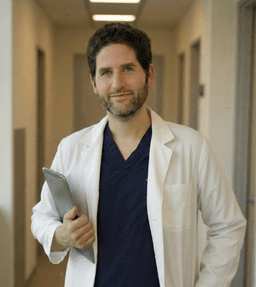
M.D., Dermatologic Surgery & Mohs Specialist, ACMS Fellow
Dr. Yehonatan Kaplan is a dermatology specialist with a US-trained fellowship in Mohs micrographic surgery and dermatologic oncology. He is a Fellow of the American College of Mohs Surgery (ACMS) and a member of the ASDS, with experience in over 6,000 Mohs procedures.
Medically reviewed on May 10, 2026
Related Articles
How I Tell a Patient They Have Skin Cancer
There is one conversation that changes the air in the room. No matter how many times I have it, it does not get smooth. After more than 6,000 Mohs procedures and even more diagnoses, I have learned that the way I deliver the first four words changes everything. This is what I have learned from the other side of the desk.
Read More →Patient WellbeingThe Emotional Side of a Skin Cancer Diagnosis: Coping and Support
A skin cancer diagnosis brings more than physical concerns. Learn about normal emotional reactions, why BCC and SCC have excellent prognoses, how to manage anxiety, and where to find support in Israel.
Read More →Mohs SurgeryThe Biopsy Site Has Healed: Do I Still Need Mohs Surgery?
A skin biopsy site can look clear while questions about further treatment remain. Understand the evidence and prepare useful documents and questions for your consultation.
Read More →