How I Tell a Patient They Have Skin Cancer

What I Have Learned About This Conversation
- Four words is roughly what the brain captures under stress. A long opening sentence disappears
- 40-80% of medical information is forgotten immediately after the visit, and nearly half of what is remembered is incorrect
- The silence after the diagnosis belongs to the patient, not to the doctor
- 30-40% of cancer patients experience an anxiety or mood disorder. The diagnosis is not only a medical moment
- One question sits beneath all the others. It is rarely 'will I die?' and usually something more personal
Tuesday Morning
A Tuesday morning. A 58-year-old woman sits in the chair across from me. She came for a routine check. Her family physician sent her because of a new spot on her neck. We did dermoscopy three days ago, biopsied the lesion the same visit, and today she is back for the result. She thinks she will hear 'everything is fine.'
On the desk between us is a sheet with the pathology result. Melanoma, Breslow depth 0.4 mm, stage IA. A diagnosis that, treated correctly, has a cure rate above 95 percent. An excellent number. But that is not what she is going to hear.
The word 'cancer' changes the air in the room. It does not matter how common the disease is. It does not matter how good the prognosis is. I know this. And still, every time I have to use the word, I pause for a moment and choose carefully.
“Information enters through the relationship, not through the screen. I can show statistics of 99 percent cure rates, draw diagrams of how Mohs works, cite meta-analyses. If the patient does not believe I care, the numbers will not help.”
Four Words
The human brain under stress captures roughly four words at a time, sometimes fewer. If my opening sentence runs 30 seconds, half of it simply disappears. Studies on medical recall show that patients forget between 40 and 80 percent of what they hear immediately after the visit, and that almost half of what they do remember is remembered incorrectly.
The patient will not lie about it. He will go home, search Google, and walk away with the wrong story.
So I learned to flip the order. Instead of 'you have skin cancer of the BCC type,' I say 'BCC is a type of skin cancer.' It sounds like wordplay, but it is not. In the first version, the brain freezes on the word 'cancer' and stops listening. In the second, it has time to absorb what BCC is before the word 'cancer' arrives, and time to understand that it is just a category.
I do not avoid the word. Hiding it is worse than saying it directly. Only the order matters.
Eight Minutes
One patient, after I told him about a melanoma, asked 'I am sorry, I hear you, I just need a moment.' I said 'of course.' That moment lasted eight minutes.
During those eight minutes he cried, got angry, thought about his father who died of lung cancer 12 years earlier, apologized twice, said something about his car, fell into long silences. I did not fill the air. I did not explain. I did not try to reassure. When he was ready he asked 'so what do we do?' - and that was the time to begin.
This may be the most important thing I have learned: the silence after the diagnosis belongs to the patient. The urge to push explanations into it comes from my discomfort, not from helping him. When I am quiet, he can think. When I talk, he is just trying to keep up.
What I Took Out of My Vocabulary
There are a few phrases I learned not to say.
'Don't worry.' A worried patient does not stop worrying because someone tells him not to. He just understands that the doctor does not understand him. If I want to reassure, I can say 'this is one of the cancers with the best prognosis there is' - which is both true and gives him something to hear, understand, and process.
'It is the easiest of the cancers.' Even if it is medically accurate, it dismisses his experience. A person who just heard the word 'cancer' does not want to be made to feel that he is overreacting. I can deliver the same message differently: 'Our treatment resolves this in 99 percent of cases.'
Anecdotes about other patients. He does not want to hear about my patient from last week. Right now he wants to hear about himself.
Detailed clinical information in the first minute. Three sentences about staging and depth of invasion is noise, not information. Those will come later, when he is ready to ask.
The Real Question
Every patient has one question underneath all the questions they actually ask. They almost never ask it directly.
For some it is 'am I going to die?' For others it is 'who will take care of the kids?' For others, 'can I still get married with this scar?' For one man I remember, the question was 'what will people at work think when I am out for surgery?' He was the CEO of a large company and had not yet told anyone he was sick.
If that question does not get a place in the conversation, it stays at night. I learned to give it room to surface. Sometimes I ask directly: 'what is bothering you most right now?' That version is better than 'do you have any questions?' because it allows the patient to say something he thought he was not allowed to say.
The Case I Come Back To
I am not going to hide it: there are cases I remember. One was a 71-year-old man. I removed a BCC on his nose, completely standard, excellent prognosis. As we were finishing and getting ready to close, he said 'so this is over now?' I said 'yes, we removed all of it.' He cried.
He cried because 14 years earlier, his wife had been diagnosed with breast cancer. Two years of treatments, forced smiles, attempts to tell themselves everything would be fine. She passed away. Since then, when he heard the word 'cancer,' he went back to her.
I did not know that story when I first told him 'you have skin cancer, BCC type.' If I had known, I might have chosen different words. Maybe not. But since then, in every diagnosis, I ask: 'have you had a close experience with cancer in your family?' One question, ten seconds, that changes the entire conversation.
After 6,000 Conversations
After more than 6,000 Mohs procedures and many more diagnostic conversations, one thing does not change: information enters through the relationship, not through the screen.
I can show statistics of 99 percent cure rates. I can draw diagrams of how Mohs works. I can cite meta-analyses. If the patient does not believe I care, the numbers will not help. If he does, he will remember even things I did not get exactly right.
This is not about being sentimental. Most of my patients do not want me to hold their hand. They want a professional who explains clearly, plans thoroughly, and looks out for them. But they also want to be seen.
What I Do Differently Today
When I finished my fellowship at Mount Sinai in Miami, I thought my job was to give accurate information. Whether the patient was listening was his problem. I was wrong.
Today I spend the first five minutes not on the diagnosis but on the question: who is this person? What does he know, what does he fear, what does he need right now? Then I begin. The conversation runs roughly the same length as before, but the absorption is different.
Some patients need me to say everything in four minutes and go home to think. Some need an hour. Some need me to bring them back in two days, after they have spoken with family. There is no single formula.
If This Has Happened to You
If you have recently heard a doctor say 'you have skin cancer,' here are a few things I learned from the other side of the desk.
You are allowed not to remember everything that was said. Most patients do not. Ask to repeat things. Ask for a summary in writing. You will get both.
You are allowed to cry, to be silent, to be angry, or not to react at all. Every reaction is legitimate. There is no right way to receive this diagnosis.
You are allowed to ask a question that sounds silly to you. Your doctor has no problem answering it. Most likely other patients have asked it before you.
You are allowed to bring someone with you. A second person in the room remembers what you will miss, and hears what you cannot hear in that moment.
You do not have to decide everything today. Most skin cancers do not require a decision within hours. If you need a few days to think, or a second opinion, that is your right.
For more on the emotional side of a skin cancer diagnosis, see our article on the emotional side of skin cancer diagnosis.
The End of the Conversation
The conversation in my office is one of the most important in a person's life. Even if it is the easiest cancer. Even if the cure rate is 99 percent. To him it is not just another case. And even if I have done this a thousand times, I try to remind myself that it is the first time for him.
Sources & References
- Baile WF, Buckman R, Lenzi R, Glober G, Beale EA, Kudelka AP. (2000). SPIKES - A six-step protocol for delivering bad news: application to the patient with cancer. The Oncologist, 5(4):302-311. [Link]
- Kessels RPC. (2003). Patients' memory for medical information. J R Soc Med, 96(5):219-222. [Link]
- Fallowfield L, Jenkins V, Farewell V, Saul J, Duffy A, Eves R. (2002). Efficacy of a Cancer Research UK communication skills training model for oncologists: a randomised controlled trial. Lancet, 359(9307):650-656. [Link]
- Mitchell AJ, Chan M, Bhatti H, et al. (2011). Prevalence of depression, anxiety, and adjustment disorder in oncological, haematological, and palliative-care settings: a meta-analysis of 94 interview-based studies. Lancet Oncol, 12(2):160-174. [Link]
- Schell JO, Arnold RM. (2012). NephroTalk: communication tools to enhance patient-centered care. Semin Dial, 25(6):611-616. [Link]
Medical Disclaimer
This article is for informational purposes only and does not constitute medical advice. Always consult a qualified dermatologist for diagnosis and treatment. The information provided should not be used for self-diagnosis or as a substitute for professional medical care.
About the Author
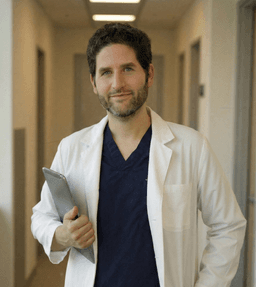
M.D., Dermatologic Surgery & Mohs Specialist, ACMS Fellow
Dr. Yehonatan Kaplan is a dermatology specialist with a US-trained fellowship in Mohs micrographic surgery and dermatologic oncology. He is a Fellow of the American College of Mohs Surgery (ACMS) and a member of the ASDS, with experience in over 6,000 Mohs procedures.
Medically reviewed on April 29, 2026
Related Articles
The Quiet Stretch: Waiting for Biopsy Results
From the moment a sample is taken until the result arrives, patients describe a stretch of days they consistently rate as harder than the visit or the procedure itself. This is not random. It is a well-documented phenomenon across biopsy types, and there are things that change how it feels, even when the timeline itself can't be shortened.
Read More →Patient WellbeingThe Emotional Side of a Skin Cancer Diagnosis: Coping and Support
A skin cancer diagnosis brings more than physical concerns. Learn about normal emotional reactions, why BCC and SCC have excellent prognoses, how to manage anxiety, and where to find support in Israel.
Read More →Mohs SurgeryThe Biopsy Site Has Healed: Do I Still Need Mohs Surgery?
A skin biopsy site can look clear while questions about further treatment remain. Understand the evidence and prepare useful documents and questions for your consultation.
Read More →