Same-Day Diagnosis and Treatment: The Complete Skin Cancer Care Model

The Problem with Fragmented Skin Cancer Care
For decades, the standard path for a patient with a suspicious skin lesion has followed a predictable and often frustrating sequence. You notice something concerning on your skin. You visit your general practitioner, who examines it briefly and refers you to a dermatologist. Weeks later, you see the dermatologist, who performs a biopsy and sends the sample to an external laboratory. More days pass before results arrive. If the biopsy confirms skin cancer, you receive a referral to a surgeon, where another waiting period begins before the procedure is scheduled. After surgery, yet another lab processes the tissue to confirm clear margins, and the results take additional days.
At each transition point, there is a gap. A gap in time, a gap in communication, and a gap in continuity of care. For the patient, these gaps translate into prolonged uncertainty, repeated explanations of medical history, and the emotional toll of waiting without answers.
This fragmented model was not designed with the patient's wellbeing at its center. It evolved from the way medical specialties developed independently. But when it comes to skin cancer, particularly basal cell carcinoma (BCC) and squamous cell carcinoma (SCC), there is a better way.
What an Integrated Clinic Model Looks Like
An integrated skin cancer clinic brings together every stage of care into a single, coordinated pathway. Rather than shuttling between multiple providers and facilities, the patient receives diagnosis, treatment planning, surgery, pathology, and reconstruction within one practice.
At the Kaplan Dermatology Practice, this means that when a patient arrives with a suspicious lesion, the journey from initial examination to definitive treatment can happen with remarkable efficiency. Dr. Yehonatan Kaplan, a fellowship-trained Mohs surgeon practicing at Assuta Medical Center and Herzliya Medical Center, has built a practice around this principle: the fewer handoffs between providers, the better the experience and the outcome.
In this model, the same physician who examines your skin and performs dermoscopy is the one who biopsies the lesion, interprets the pathology, performs Mohs surgery if needed, and handles the reconstruction. There is no information lost in translation, no duplicated tests, and no unnecessary delays.
The Impact of Delays on Patient Outcomes
Time matters in skin cancer care, though not always in the way patients fear. BCC and SCC are generally slow-growing cancers, and a few weeks rarely change the medical prognosis. However, delays have other consequences that are very real.
First, there is the psychological burden. Research consistently shows that the period between suspecting cancer and receiving a definitive diagnosis is one of the most stressful experiences a patient can endure. Every additional day of waiting amplifies anxiety. When the journey from biopsy to treatment stretches across weeks or months, the emotional cost is substantial.
Second, there are practical considerations. Each separate appointment means time away from work, arranging transportation, and managing family responsibilities. For patients in Israel who may need to travel between cities or coordinate between different health funds and facilities, the logistical burden multiplies.
Third, in certain clinical situations, delays can matter medically. Aggressive subtypes of SCC, tumors in high-risk locations such as the nose, ears, or around the eyes, and lesions in immunocompromised patients all benefit from prompt treatment. A streamlined pathway ensures that patients who need urgent care receive it without bureaucratic obstacles.
Reducing Anxiety Through Coordinated Care
One of the most underappreciated benefits of the integrated clinic model is its effect on patient anxiety. When you know that the physician examining your lesion today is the same specialist who will treat it, there is an immediate sense of being in capable hands. You do not need to worry about whether your referral will go through, whether the next specialist will have your records, or whether you will need to advocate for yourself at each new office.
Patients frequently describe the traditional referral pathway as feeling like they are falling through the cracks. Messages get lost. Appointments are delayed. One specialist says one thing, and the next seems to have a different perspective. The integrated model eliminates these fractures in communication.
At the Dr. Kaplan's practice, Dr. Kaplan personally reviews all diagnostic findings and discusses treatment options directly with each patient. If Mohs surgery is recommended, the patient already knows and trusts the surgeon because it is the same physician who made the diagnosis. This continuity of relationship is profoundly reassuring at a time when patients need reassurance most.
Faster Diagnosis-to-Treatment Time
In the traditional fragmented model, the time from initial biopsy to definitive surgical treatment can range from four to eight weeks or longer, depending on referral wait times, lab turnaround, and surgical scheduling. In an integrated clinic, this timeline is significantly shorter.
With on-site or closely coordinated pathology, biopsy results can be available within days rather than weeks. Treatment planning begins immediately upon diagnosis, and surgery can often be scheduled within one to two weeks. In some cases, same-day biopsy and treatment is possible for straightforward lesions.
This acceleration is not about rushing care. It is about removing unnecessary waiting that serves no medical purpose. Every step happens when it should, without idle gaps caused by administrative processes or fragmented scheduling systems.
How the Dr. Kaplan's practice Provides Integrated Care
Dr. Kaplan's practice at Assuta Medical Center and Herzliya Medical Center is structured to offer patients a seamless experience from the moment they walk through the door.
The process begins with a thorough skin examination, including dermoscopy, which allows for magnified evaluation of suspicious lesions. If a biopsy is indicated, it is performed during that same visit. Pathology results are obtained promptly, and if skin cancer is confirmed, treatment planning begins without delay.
For BCC and SCC, Mohs micrographic surgery is often the gold standard treatment, offering a 99% cure rate for BCC while preserving the maximum amount of healthy tissue. Mohs surgery itself is an inherently integrated procedure, as it combines surgery and pathology in real time. During the procedure, each layer of tissue is examined microscopically before the next is removed, ensuring complete cancer clearance while sparing surrounding skin.
After tumor removal, reconstruction is performed immediately, typically by Dr. Kaplan himself. This means the patient leaves with the cancer fully removed and the wound expertly repaired, all in a single surgical session.
Follow-up care, including wound monitoring and long-term surveillance, continues within the same practice. The patient never needs to start over with a new provider or navigate an unfamiliar system.
The Laboratory That Makes It Possible
What enables the one-day model is a pathology laboratory inside the facility. After each layer is removed, the tissue is frozen in a dedicated instrument (a cryostat), cut into micron-thin sections, stained, and examined under the microscope within the hour. In Mohs surgery the surgeon personally reads the slides: the person who knows the patient and the surgical map is also the one deciding whether another layer is needed.
This is also where the fundamental difference from standard excision lies: an external laboratory examines only about 1-2% of the margin surface using representative "bread-loaf" sections, while Mohs surgery examines 100% of the margins, peripheral and deep. That is the reason for the technique's high cure rates, and the reason a final answer is available the same day.
When One Day Is Possible, and When It Is Not
Not every case suits the one-day pathway, and this is a clinical decision made with full transparency. The pathway fits when the clinical and dermoscopic findings are sharp enough, when the tumor type and location are appropriate for Mohs surgery, and when this is the patient's preference. By contrast, when the diagnosis is uncertain, when preliminary pathology is needed for planning, or when the patient prefers to process the information at their own pace and consult family, we start with a biopsy and schedule surgery separately. Both pathways are legitimate, and the choice is made together.
The Future of Skin Cancer Care
The integrated clinic model is not a luxury. It represents the direction in which skin cancer care is heading worldwide. Leading dermatologic surgery centers in Europe, Australia, and the United States have adopted integrated care pathways because the evidence supports better outcomes, higher patient satisfaction, and more efficient use of healthcare resources.
In Israel, where skin cancer rates are among the highest in the developed world due to intense UV exposure, the need for streamlined care is especially acute. Patients deserve a pathway that respects their time, minimizes their anxiety, and delivers the highest standard of treatment.
If you have been diagnosed with skin cancer or have a suspicious lesion that needs evaluation, consider seeking care from a clinic that offers the full spectrum of services under one roof. The difference in your experience, and potentially in your outcome, can be profound.
Taking the First Step
A skin cancer diagnosis can feel overwhelming, but it does not have to be a fragmented, confusing process. At the Kaplan Dermatology Practice, every aspect of your care is coordinated by a specialist who is with you from the first examination through treatment and beyond. If you have concerns about a skin lesion, scheduling a full consultation is the most efficient path to clarity and, if needed, definitive treatment.
Sources & References
- https://www.ncbi.nlm.nih.gov/books/NBK441833/
- https://www.ncbi.nlm.nih.gov/books/NBK617060/
- https://www.ncbi.nlm.nih.gov/books/NBK470457/
- https://pmc.ncbi.nlm.nih.gov/articles/PMC5659633/
- https://www.mohscollege.org/for-patients/about-mohs-surgery/the-mohs-surgery-procedure
- https://www.skincancer.org/treatment-resources/mohs-surgery/
Medical Disclaimer
This article is for informational purposes only and does not constitute medical advice. Always consult a qualified dermatologist for diagnosis and treatment. The information provided should not be used for self-diagnosis or as a substitute for professional medical care.
About the Author
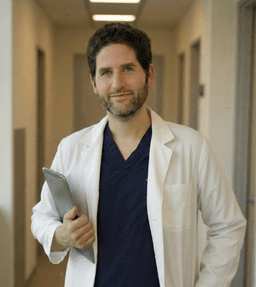
M.D., Dermatologic Surgery & Mohs Specialist, ACMS Fellow
Dr. Yehonatan Kaplan is a dermatology specialist with a US-trained fellowship in Mohs micrographic surgery and dermatologic oncology. He is a Fellow of the American College of Mohs Surgery (ACMS) and a member of the ASDS, with experience in over 6,000 Mohs procedures.
Medically reviewed on July 30, 2026
Related Articles
The Biopsy Site Has Healed: Do I Still Need Mohs Surgery?
A skin biopsy site can look clear while questions about further treatment remain. Understand the evidence and prepare useful documents and questions for your consultation.
Read More →Mohs SurgeryWhat you are agreeing to before Mohs surgery
A consent form lists everything that could happen, however rare. In a study of 20,821 Mohs procedures, any adverse event occurred in 0.72% of cases. Here is what the form says, in plain language.
Read More →Mohs SurgeryThe Practice in Numbers: Updated Mohs Surgery Data (September 2026)
How many Mohs procedures Dr. Kaplan has performed, what percentage of the surgical margin is examined in every operation, and what the numbers say about the Mohs technique itself. A transparency page updated quarterly, with external sources you can verify.
Read More →