Mohs Surgery vs. Standard Excision (WLE) - What's the Difference?

Key Facts
- 100% of margins examined in Mohs surgery, versus 1-5% in standard excision
- Up to 99% cure for a primary tumor with Mohs, versus 90-95% with excision
- 4-6 mm of margin removed in standard excision
- Immediate margin result in Mohs, versus days to weeks
- One procedure in most Mohs cases, with no need for a second operation
Mohs Surgery vs. Standard Excision: A Comparison Guide
When skin cancer (BCC or SCC) is diagnosed, one of the key clinical decisions is choosing the surgical approach. The two most common methods are Mohs micrographic surgery and standard wide local excision (WLE). Understanding the differences will help you make an informed decision together with your treating physician.
“Not every tumor needs Mohs. For a small, well-defined lesion on the trunk, standard excision gives an excellent result. I recommend Mohs when the borders are unclear, when the tumor has recurred, or when every millimeter matters, as on the nose and eyelid.”
What Is Standard Excision?
In standard excision, the surgeon removes the visible tumor along with 4-6 mm margins of surrounding healthy tissue. The tissue is sent to an external pathology lab, and margin results are available after several days. If margins are not clear, a repeat surgery is required.
What Is Mohs Surgery?
In Mohs surgery, the surgeon removes thin layers of tissue one at a time. Each layer is examined under a microscope in real time, where 100% of the margin surface is checked, compared to only 1-5% in standard excision. The process continues until all margins are free of cancer cells.
Comparison at a Glance
Cure rate: Mohs - up to 99% for primary tumors. Standard excision - 90-95%.
Margin examination: Mohs - 100% of margins, in real time. Standard excision - random samples (1-5%), results in days.
Tissue preservation: Mohs - maximal, removing minimal layers. Standard excision - wide margins (4-6 mm).
Number of procedures: Mohs - usually a single procedure. Standard excision - sometimes requires repeat surgery if margins are positive.
Reconstruction: Mohs - immediate, same day. Standard excision - sometimes separate.
Time to results: Mohs - immediate. Standard excision - days to weeks.
What Does the Research Show?
A study published in the Israel Medical Association Journal (IMAJ) by Dr. Kaplan (2025) expands the evidence base for Mohs surgery beyond traditional head and neck indications. The research demonstrates that Mohs surgery is effective for advanced SCC tumors on the limbs and trunk, with improved disease-specific survival rates.
This finding is particularly significant for patients with tumors in areas that were not previously considered a clear indication for Mohs.
Who Is a Candidate for Mohs Surgery?
Mohs surgery is especially recommended for:
- BCC and SCC tumors on the face, ears, lips, nose, and eyelids
- Recurrent tumors that have been previously treated
- Large tumors or those with unclear borders
- Tumors near important functional areas
- Cases where tissue preservation is essential for cosmetic outcomes
Who Is a Candidate for Standard Excision?
Standard excision is an excellent treatment for:
- Small, well-defined tumors in less sensitive areas
- Superficial BCC on the limbs or trunk
- Cases where there is sufficient tissue margin around the tumor
The Advantage of a Certified Mohs Surgeon
It's important to understand that Mohs surgery requires specialized training beyond dermatology residency. Dr. Yehonatan Kaplan completed a Mohs Surgery and Dermatologic Oncology Fellowship at Mount Sinai Medical Center in Miami Beach, an ACMS (American College of Mohs Surgery) approved program.
This training ensures:
- Full proficiency in layer removal and microscopic examination
- Immediate reconstruction capability: Dr. Kaplan performs reconstruction himself on the same day
- Dermatologic oncology expertise for optimal treatment planning
Frequently Asked Questions
Is Mohs surgery always better than standard excision? Not necessarily. The choice depends on the tumor type, location, size, and medical history. Each method has its place. The decision is made during a personal consultation.
Is Mohs surgery more expensive? Mohs surgery for BCC and SCC in the head and neck area is included in the Israeli health basket. Maccabi members can have the procedure at Assuta, and Clalit members at HMC with Form 17.
How does recovery from Mohs compare to excision? Recovery times are similar. Most patients return to routine within a few days. The advantage of Mohs is that the wound is usually smaller thanks to maximal tissue preservation.
For more information about Mohs surgery, read the complete Mohs surgery guide. To schedule a personal consultation, contact the clinic.
Sources & References
Medical Disclaimer
This article is for informational purposes only and does not constitute medical advice. Always consult a qualified dermatologist for diagnosis and treatment. The information provided should not be used for self-diagnosis or as a substitute for professional medical care.
About the Author
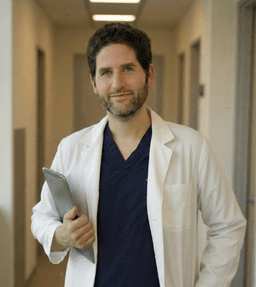
M.D., Dermatologic Surgery & Mohs Specialist, ACMS Fellow
Dr. Yehonatan Kaplan is a dermatology specialist with a US-trained fellowship in Mohs micrographic surgery and dermatologic oncology. He is a Fellow of the American College of Mohs Surgery (ACMS) and a member of the ASDS, with experience in over 6,000 Mohs procedures.
Medically reviewed on September 1, 2026
Related Articles
The Biopsy Site Has Healed: Do I Still Need Mohs Surgery?
A skin biopsy site can look clear while questions about further treatment remain. Understand the evidence and prepare useful documents and questions for your consultation.
Read More →Mohs SurgeryWhat you are agreeing to before Mohs surgery
A consent form lists everything that could happen, however rare. In a study of 20,821 Mohs procedures, any adverse event occurred in 0.72% of cases. Here is what the form says, in plain language.
Read More →Mohs SurgeryThe Practice in Numbers: Updated Mohs Surgery Data (September 2026)
How many Mohs procedures Dr. Kaplan has performed, what percentage of the surgical margin is examined in every operation, and what the numbers say about the Mohs technique itself. A transparency page updated quarterly, with external sources you can verify.
Read More →