Why Mohs Surgery Has a 99% Cure Rate: The Science Explained

Key Facts
- 99% cure rate for primary BCC, compared to 93-95% with standard excision
- 100% of the tissue margin is examined in Mohs, versus only 1-2% in standard pathology
- 5x lower recurrence risk with Mohs surgery compared to standard excision
- 30-45 minutes per layer for tissue processing and microscopic examination
The Numbers That Set Mohs Surgery Apart
When patients learn that Mohs micrographic surgery has a cure rate of approximately 99 percent for primary basal cell carcinoma (BCC) and 97 percent for primary squamous cell carcinoma (SCC), a natural question follows: How is that possible? What makes this technique so much more effective than standard surgical excision, which achieves cure rates of approximately 93 to 95 percent?
The difference is not a matter of surgical skill alone. It is fundamentally about how the tissue is examined. Understanding the science behind Mohs surgery can give patients genuine confidence that they are choosing the most effective treatment available for their skin cancer.
“The difference between examining 1% of the margin and 100% of the margin is not a small technical detail. It is the reason Mohs surgery achieves cure rates that no other treatment can match.”
The Problem with Standard Excision: Sampling Error
To appreciate why Mohs surgery is superior, it helps to understand the limitations of standard surgical excision.
In standard excision, the surgeon removes the visible tumor along with a safety margin of surrounding tissue, typically 3 to 5 millimeters for BCC. The excised tissue is then sent to a pathology laboratory where it is processed and examined under a microscope. This process usually takes several days.
Here is the key issue. The standard pathology technique, known as bread-loaf sectioning, involves cutting the tissue specimen into thin vertical slices, much like slicing a loaf of bread. These slices are then examined under the microscope to determine whether cancer cells are present at the edges, or margins, of the specimen.
The problem is that bread-loaf sectioning only samples a small fraction of the total surgical margin. Depending on how many slices are taken and how thick they are, a standard pathology examination may evaluate as little as 1 to 2 percent of the actual tissue margin. The remaining 98 to 99 percent is simply not examined.
This means that cancer cells can be present at the margin and go undetected. If residual cancer cells remain after surgery, they will continue to grow, resulting in a recurrence that requires additional treatment.
The Mohs Solution: 100 Percent Margin Examination
Mohs surgery solves the sampling problem completely by using a different tissue processing technique that allows examination of 100 percent of the surgical margin.
How it works. After a thin layer of tissue is removed, it is processed using a technique called en face frozen sectioning. Rather than cutting the tissue vertically like bread slices, the Mohs technique flattens the tissue so that the entire undersurface and outer edges can be cut into a single horizontal section. This section is then stained, placed on a microscope slide, and examined.
The result is that every single cell at the margin of the excised tissue is visible under the microscope. There is no sampling. There is no estimation. The surgeon can see, with certainty, whether cancer cells are present anywhere at the edge of the removed tissue.
This is the fundamental reason Mohs surgery has a higher cure rate. When you examine 100 percent of the margin rather than 1 to 2 percent, residual cancer cells are far less likely to be missed.
The Frozen Section Technique
The tissue processing in Mohs surgery uses frozen sections rather than the permanent sections used in standard pathology. After the tissue layer is removed, it is taken to an on-site laboratory. At Assuta Hospital and Herzliya Medical Center, where Dr. Yehonatan Kaplan performs Mohs surgery, dedicated laboratory facilities are available for immediate processing.
The tissue is flattened and embedded in a cryostat, a specialized freezing device that rapidly freezes it to approximately minus 20 to minus 30 degrees Celsius. The frozen tissue is then cut into sections approximately 5 to 8 micrometers thick, thinner than a human hair, and mounted on glass microscope slides. These sections are stained with hematoxylin and eosin (H&E), which colors different cell types distinctly, allowing cancer cells to be clearly distinguished from normal cells.
The Mohs surgeon, who is specially trained in both surgery and dermatopathology, examines the slides under the microscope. Because the entire margin is represented on the slide, the surgeon can identify exactly where cancer cells remain. The entire process, from tissue removal to microscopic examination, takes approximately 30 to 45 minutes per layer. This is why patients wait between layers during the procedure.
The Mapping System: Precision Targeting
Another essential component is the mapping system that connects microscopic findings to the exact location on the patient's body. Before processing, the removed tissue is marked with colored dyes and a detailed map records its orientation relative to the wound. When cancer cells are found, the surgeon knows their precise location and targets only that specific area in the next layer. Healthy tissue is preserved everywhere else. This targeted approach allows Mohs surgery to achieve both the highest cure rate and the smallest possible wound.
Comparison: Mohs Surgery vs. Standard Excision
The following comparison illustrates why the two approaches produce different outcomes.
Standard excision removes the tumor with a predetermined margin, sends tissue to an external lab, examines approximately 1 to 2 percent of the margin, takes several days for pathology results, may require a second surgery if margins are positive, and achieves a cure rate of approximately 93 to 95 percent for primary BCC.
Mohs surgery removes tissue layer by layer with minimal margins, processes tissue in an on-site lab in real time, examines 100 percent of the margin, provides results within 30 to 45 minutes per layer, allows immediate additional removal if needed, and achieves a cure rate of approximately 99 percent for primary BCC and 97 percent for primary SCC.
The 4 to 6 percentage point difference in cure rate may sound small in absolute terms, but it translates to a significant reduction in treatment failure. A patient with a 95 percent cure rate has a 1 in 20 chance of recurrence. A patient with a 99 percent cure rate has a 1 in 100 chance. That is a fivefold reduction in risk.
Published Research Supporting Mohs Surgery Outcomes
The cure rates for Mohs surgery are not theoretical estimates. They are supported by decades of published clinical research involving thousands of patients. Large-scale studies tracking patients for 5 years or more have consistently demonstrated cure rates of 99 percent for primary BCC and 97 percent for primary SCC. For recurrent BCC, Mohs surgery achieves cure rates of approximately 94 to 96 percent, higher than any other treatment modality for recurrent disease. These outcomes have been validated by peer-reviewed studies published in dermatologic and surgical journals over several decades.
Why Complete Margin Examination Changes Everything
The concept underlying Mohs surgery's success is simple but powerful: if you can confirm that every edge of the removed tissue is free of cancer, you can be confident that no cancer remains in the patient.
Skin cancers, particularly BCC, often grow with irregular, finger-like extensions that are invisible to the naked eye. Standard excision attempts to account for this with the safety margin, but because the full margin is not examined, some extensions can be missed. Mohs surgery does not rely on a safety margin. It relies on direct visual confirmation, with the mapping system targeting only the specific area where residual cancer is detected.
This approach is particularly valuable for tumors with aggressive histologic subtypes such as infiltrative or morpheaform BCC; tumors on the nose, ears, eyelids, and lips where tissue conservation is essential, as discussed in our articles on nasal Mohs surgery and facial Mohs surgery; recurrent tumors where previous treatment has disrupted normal tissue architecture; and large tumors where the extent of subclinical spread is difficult to predict.
What This Means for You as a Patient
If you have been recommended Mohs surgery for your BCC or SCC, understanding the science should give you confidence in the recommendation. You are choosing a treatment that examines 100 percent of the surgical margin, identifies and removes residual cancer in real time, preserves the maximum amount of healthy tissue, achieves the highest cure rate available, and is backed by decades of rigorous clinical evidence.
The 99 percent cure rate is not a marketing number. It is the result of a scientifically sound approach to tissue examination that eliminates the sampling error inherent in standard pathology.
Next Steps
If you are preparing for Mohs surgery, understanding the science behind the procedure is an excellent start. To continue preparing, you may find these resources helpful. Our complete guide to Mohs surgery provides an overview of the entire procedure from start to finish. Our pre-surgery preparation checklist covers practical steps for the days and hours before your appointment. And our list of 10 questions to ask your dermatologist helps ensure you have all the information you need before your procedure.
Dr. Kaplan performs Mohs surgery at Assuta Hospital for Maccabi patients and at Herzliya Medical Center for Clalit patients. If you have questions about whether Mohs surgery is appropriate for your skin cancer, a consultation can provide personalized guidance based on your specific diagnosis.
Sources & References
Medical Disclaimer
This article is for informational purposes only and does not constitute medical advice. Always consult a qualified dermatologist for diagnosis and treatment. The information provided should not be used for self-diagnosis or as a substitute for professional medical care.
About the Author
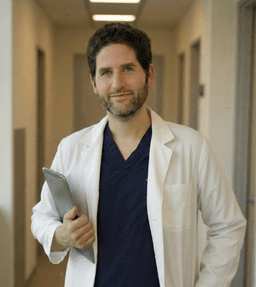
M.D., Dermatologic Surgery & Mohs Specialist, ACMS Fellow
Dr. Yehonatan Kaplan is a dermatology specialist with a US-trained fellowship in Mohs micrographic surgery and dermatologic oncology. He is a Fellow of the American College of Mohs Surgery (ACMS) and a member of the ASDS, with experience in over 6,000 Mohs procedures.
Medically reviewed on February 28, 2026
Related Articles
Mohs Surgery on the Face: Eyelid, Ear, and Lip Options
Skin cancer on the eyelid, ear, or lip requires a surgeon who understands both cancer removal and the delicate anatomy of each area. Learn why Mohs surgery is the preferred treatment for these challenging facial locations and what reconstruction options are available.
Read More →Mohs SurgeryMinimizing Scars After Mohs Surgery: Expert Tips
Scarring after Mohs surgery is a natural part of healing, but there is a great deal you can do to minimize its appearance. Learn why Mohs produces better cosmetic outcomes than standard excision, and discover proven techniques for optimal scar healing.
Read More →Mohs SurgeryMohs Surgery Recovery: A Week-by-Week Healing Timeline
Knowing what to expect after Mohs surgery can ease anxiety and help you heal optimally. This detailed timeline covers every phase from the first day through the final cosmetic result at one year.
Read More →