Actinic Keratosis Treatment: From Cryotherapy to Surgery - What to Expect

Key Facts
- 5-10% of untreated actinic keratoses may progress to squamous cell carcinoma
- 58 million people are estimated to have actinic keratoses worldwide
- 75% of AKs develop on the face, scalp, ears, neck, and forearms
- 70-90% clearance rates achievable with field-directed treatments such as 5-FU
- Up to 60% of SCCs arise from a pre-existing actinic keratosis
Why Treating Actinic Keratoses Matters
Actinic keratoses (AKs) are rough, scaly patches of skin caused by years of ultraviolet radiation exposure. They are the most common precancerous skin lesion. If you have been diagnosed with AKs, you are not alone - they affect millions of people worldwide, and in sunny countries like Israel they are extremely common.
The reason treatment matters is straightforward: an estimated 5-10% of actinic keratoses can progress to squamous cell carcinoma (SCC), an invasive skin cancer. Up to 60% of SCCs arise from a pre-existing AK, and there is no reliable way to predict which individual AK will become cancerous. That is why dermatologists treat all of them. For details on diagnosis, see our actinic keratosis condition page.
“In my practice, I see actinic keratoses every single day. In Israel's climate, these are not a matter of if but when for sun-exposed patients. The good news is that we have many effective treatments. The key is matching the right treatment to each patient's situation and treating the entire sun-damaged field, not just the visible spots.”
How Your Dermatologist Chooses a Treatment
There is no single best treatment for AKs. The choice depends on several factors:
Number of lesions. Isolated spots are treated one at a time (spot treatment), while widespread disease calls for treating an entire region of sun-damaged skin (field treatment).
Location. Facial skin heals quickly and responds well to most treatments, while skin on the lower legs heals more slowly and may not tolerate aggressive approaches.
Thickness. Thin AKs respond well to topical creams and light-based treatments. Thick, crusty AKs are more likely to need cryotherapy or curettage because topical treatments may not penetrate deeply enough.
Patient preference. Some patients prefer a quick in-office procedure. Others prefer applying a cream at home over several weeks. Work schedules and tolerance for temporary redness factor into the decision.
Immune status. Immunosuppressed patients need more aggressive treatment because their AKs carry a higher risk of progressing to SCC.
Spot Treatments: Targeting Individual Lesions
Cryotherapy (Liquid Nitrogen)
Cryotherapy is the most widely used treatment for individual AKs. It is quick, effective, and performed during a routine office visit without anesthesia.
How it works. Your dermatologist applies liquid nitrogen (-196 degrees Celsius) directly to the AK using a spray device or cotton-tipped applicator. The extreme cold destroys the abnormal cells.
What to expect. Each lesion takes only a few seconds to treat. You will feel a stinging or burning sensation lasting about 10 to 30 seconds. Most patients describe it as tolerable.
Recovery. The area becomes red and swollen, and a blister may form over the next day or two. The blister dries into a scab that falls off within one to three weeks. Temporary lightening of the skin at the treatment site is common, especially in darker skin tones.
Pros. Fast, inexpensive, no downtime, no prescription needed.
Cons. Can cause temporary discoloration, not practical for large numbers of AKs, does not treat subclinical (invisible) lesions in the surrounding skin.
Curettage (Scraping)
Curettage is used for thick, hypertrophic AKs that are unlikely to respond to cryotherapy or topical treatments.
How it works. After numbing the area with local anesthesia, your dermatologist uses a curette - a sharp, spoon-shaped instrument - to scrape away the abnormal tissue. The base may be treated with electrodesiccation to destroy remaining abnormal cells.
Recovery. The wound heals over two to four weeks. A small, flat scar may result.
Pros. Highly effective for thick AKs, provides tissue for pathological examination if SCC is suspected.
Cons. Requires local anesthesia, slower healing than cryotherapy, minor scarring.
When Surgery Is Needed
Surgery is not a standard treatment for typical actinic keratoses. However, surgical excision or biopsy becomes necessary when an AK shows signs of possible progression to squamous cell carcinoma. Warning signs include rapid growth, significant thickening, induration (hardness), tenderness, bleeding, or failure to respond to standard treatment.
If a biopsy confirms SCC, the treatment plan shifts to a cancer-focused approach. For high-risk SCCs, particularly those on the face, Mohs micrographic surgery offers the highest cure rate with maximum tissue preservation.
Field Treatments: Addressing the Entire Damaged Area
Field treatments target not only the visible AKs but also the surrounding field of sun-damaged skin, which contains subclinical AKs - abnormal cells that are not yet visible to the naked eye but are already accumulating mutations. Treating the field reduces the number of new AKs that appear over the following months and years.
5-Fluorouracil (5-FU) Cream
5-Fluorouracil cream, available in Israel, is one of the most effective field treatments for actinic keratoses.
How it works. 5-FU is a topical chemotherapy agent that blocks DNA synthesis in abnormally dividing cells. You apply a thin layer to the affected area once or twice daily for two to four weeks.
What to expect. The treated skin goes through a predictable inflammatory reaction. During the first week, mild redness appears. By the second week, the skin becomes significantly red, raw, and crusted. This looks dramatic but is a sign the medication is working - it selectively destroys abnormal cells. Areas with more subclinical damage react more intensely, revealing the true extent of sun damage.
Recovery. After stopping the cream, skin heals over one to four weeks. Most patients are surprised by how much better their skin looks after healing.
Pros. Treats both visible and invisible AKs, 70-90% clearance rates, applied at home, inexpensive, treats large areas.
Cons. Two to four weeks of significant redness and irritation, social downtime, requires good compliance.
Practical tip. Plan your 5-FU course during a time when you can manage the social impact - many patients choose winter months. A gentle, fragrance-free moisturizer alongside treatment can reduce discomfort.
Imiquimod (Aldara) Cream
Imiquimod, also available in Israel, takes a different approach. Rather than directly killing abnormal cells, it stimulates your immune system to recognize and destroy them.
How it works. Imiquimod activates toll-like receptor 7, triggering a local immune response against precancerous cells. It is applied two to three times per week for four to sixteen weeks.
What to expect. The skin develops redness, scaling, and sometimes crusting. The reaction is generally less intense than 5-FU, though it varies. Some patients experience mild flu-like symptoms, though this is uncommon.
Recovery. The skin heals over two to four weeks after completing the course.
Pros. Immune-mediated mechanism, less intense reaction than 5-FU, convenient application schedule.
Cons. Longer treatment course, more expensive than 5-FU, can still cause significant irritation.
Photodynamic Therapy (PDT)
PDT combines a light-sensitizing agent with a specific wavelength of light to selectively destroy precancerous cells. It is well-suited for treating large areas.
How it works. A photosensitizing agent is applied to the treatment area and left to incubate for one to three hours. Precancerous cells preferentially absorb the photosensitizer. The area is then exposed to red or blue light, which activates the agent and destroys the abnormal cells.
What to expect. The incubation is painless. During light activation, most patients feel a stinging or burning sensation (mild to moderate). Cooling fans help manage discomfort. Light exposure takes 10 to 20 minutes.
Recovery. Redness, swelling, and crusting resolve within one to two weeks. Cosmetic results are excellent.
Important: sun avoidance. You must avoid sun exposure for 48 hours after PDT because the photosensitizer remains active. Even brief sun exposure can cause a severe burn.
Pros. Excellent cosmetic results, effective for large areas, minimal scarring, can be repeated.
Cons. Requires in-office treatment, discomfort during light activation, strict sun avoidance, may need multiple sessions.
Field Treatment vs. Spot Treatment
Spot treatment (cryotherapy, curettage) is appropriate for a small number of isolated lesions. It is quick and targeted but does not address subclinical damage in the surrounding skin.
Field treatment (5-FU, imiquimod, PDT) is recommended when you have multiple AKs, a history of recurrence, or extensive sun damage (field cancerization). It addresses both visible lesions and invisible precancerous changes.
Many patients benefit from a combination: cryotherapy for thick, prominent AKs followed by 5-FU cream for the surrounding field. This two-pronged strategy addresses immediate concerns while providing long-term benefit.
Living in Israel: Why AK Management Is Ongoing
Israel's UV index regularly reaches extreme levels, and the culture of outdoor activity means high rates of actinic keratoses. Treating AKs is not a one-time event here - it is an ongoing process of monitoring, treating new lesions, and protecting the skin.
Compulsory military service often means years of intense outdoor UV exposure during young adulthood, contributing to AK development decades later. Even patients who are now careful about sun protection may have accumulated significant damage during earlier years.
When to Worry: Signs an AK May Be Progressing
Most actinic keratoses remain stable or even regress on their own. However, certain changes should prompt an immediate visit to your dermatologist:
- Rapid growth - an AK that suddenly increases in size over weeks
- Increased thickness - a flat AK that becomes raised, nodular, or develops a horn-like projection
- Tenderness or pain - AKs are usually asymptomatic; new pain or tenderness is concerning
- Bleeding - spontaneous bleeding or bleeding with minimal contact
- Induration - the lesion feels hard or firm at its base
- Failure to respond - an AK that does not improve despite appropriate treatment
These changes do not necessarily mean cancer has developed, but they warrant biopsy to rule out progression to SCC.
Prevention After Treatment
Without ongoing prevention, new AKs will continue to develop.
Daily sunscreen. Broad-spectrum SPF 30 or higher on all exposed skin, reapplied every two hours outdoors. In Israel, this is a year-round requirement.
Protective clothing. A broad-brimmed hat protects the face, ears, and scalp. UPF-rated long sleeves provide reliable arm protection.
Seek shade. Particularly between 10 AM and 4 PM. In Israeli summer, this window extends to 5 PM or later.
Regular skin checks. Schedule follow-up appointments every 6 to 12 months.
Self-examination. Check your skin monthly. Run your fingers over sun-exposed areas - AKs are often easier to feel than to see.
Frequently Asked Questions
Is actinic keratosis a type of skin cancer?
Actinic keratosis is classified as a precancerous lesion, not a cancer itself. However, dermatologists increasingly view AKs as existing on a continuum with squamous cell carcinoma. The cellular changes in an AK are the earliest stage of the process that, if left unchecked, can progress to invasive SCC. This is why all AKs should be treated.
Does cryotherapy hurt?
Most patients describe it as a sharp stinging sensation lasting 10 to 30 seconds per lesion. The discomfort is brief and tolerable without anesthesia.
How long does the redness last after 5-FU treatment?
During the active phase (two to four weeks), skin becomes progressively red and crusted. After stopping the cream, redness resolves over two to four weeks. The total time from starting treatment to looking normal is typically six to eight weeks.
Can actinic keratoses come back after treatment?
Yes. Treatment destroys existing AKs, but it does not change the underlying sun damage in your skin's DNA. New AKs can and frequently do develop, especially with continued sun exposure. This is why ongoing prevention and regular monitoring are essential.
Should I treat AKs on my legs differently than those on my face?
Lower leg AKs are more challenging because the skin heals slowly with reduced blood flow. Cryotherapy should be applied conservatively to avoid slow-healing wounds. Topical treatments work but may cause more discomfort. Your dermatologist adjusts the approach based on location.
How many AKs are too many to treat with cryotherapy alone?
There is no strict cutoff, but when a patient has more than approximately five to ten AKs in a single anatomic area, or when new AKs keep appearing rapidly, it usually makes sense to add field-directed therapy rather than freezing each one individually. Field treatment addresses the underlying field cancerization and reduces the rate at which new lesions develop.
Taking the Next Step
If you have been diagnosed with actinic keratoses, or if you have noticed rough, scaly patches on sun-exposed skin, do not delay in seeking evaluation. At Assuta and Herzliya Medical Center, Dr. Yehonatan Kaplan evaluates and treats the full spectrum of actinic keratoses, from isolated spots requiring a quick freeze to widespread field disease requiring a multi-step treatment plan. Early treatment keeps these precancerous lesions from becoming a more serious problem.
Sources & References
Medical Disclaimer
This article is for informational purposes only and does not constitute medical advice. Always consult a qualified dermatologist for diagnosis and treatment. The information provided should not be used for self-diagnosis or as a substitute for professional medical care.
About the Author
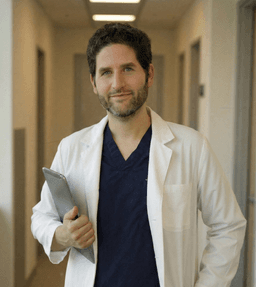
M.D., Dermatologic Surgery & Mohs Specialist, ACMS Fellow
Dr. Yehonatan Kaplan is a dermatology specialist with a US-trained fellowship in Mohs micrographic surgery and dermatologic oncology. He is a Fellow of the American College of Mohs Surgery (ACMS) and a member of the ASDS, with experience in over 6,000 Mohs procedures.
Medically reviewed on April 13, 2026
Related Articles
The ABCDEs of Melanoma Detection
Learn the warning signs of melanoma and when to see a dermatologist for a skin check.
Read More →Skin CancerTreating Recurrent Skin Cancer: What You Need to Know
When skin cancer returns after treatment, it requires a different approach. Learn why recurrence happens, how Mohs surgery offers the best outcomes for recurrent tumors, and what follow-up protocols can protect you.
Read More →Skin CancerBCC vs. SCC: Understanding the Two Most Common Skin Cancers
Basal cell carcinoma and squamous cell carcinoma are the two most common skin cancers, but they differ in appearance, behavior, and treatment. Learn the key differences and why both benefit from early detection.
Read More →