What you are agreeing to before Mohs surgery

The numbers behind the form
- 0.72% of 20,821 Mohs procedures at 23 centres had any adverse event, most of them a treated infection
- 0.02% had a serious event. No deaths were recorded in that study
- 1.5 to 2.1 stages on average were needed to clear the tumour, depending on histological subtype
- 7 to 14 days until the sutures come out, in most cases
- About 99% cure for a primary basal cell carcinoma, on five-year follow-up
Before Mohs surgery you sign an informed consent form. It is written in legal language, it lists a series of complications, and most people read it for the first time on the morning of the operation, when they are already tense.
This page explains what it says, in plain language, and what the numbers actually mean.
Why the form reads more alarming than it is
An informed consent form is meant to list everything that could happen, however rare. That is its purpose. So it reads like a list of bad outcomes, while the reality is far quieter.
The largest study on the subject followed 20,821 Mohs procedures across 23 medical centres. An adverse event of any kind was recorded in 149 cases, that is 0.72 percent. A serious event was recorded in 4 cases, 0.02 percent, and no deaths were recorded. Of the events that did occur, most were infections that were treated, followed by wound-healing problems and bleeding.
So the list in the form is long, but the chance that any of it happens to you is small.
“The consent form is not there to frighten anyone. It is there to make sure the two of us are describing the same operation. If something in it is unclear, that is exactly the question to ask before signing rather than after.”
What the signature actually covers
Four things, all of which are also said out loud before anything begins:
- What will be done: the tumour is removed in thin layers, each layer is examined under the microscope during the same visit, and this continues until the margins are clear.
- The expected result: high cure rates, maximum preservation of healthy tissue, and reconstruction of the area at the end of the operation.
- The alternatives: standard excision without microscopic control, freezing, radiation, or laser treatment. Each has its own advantages and disadvantages.
- What could go wrong: the list described above.
The signature also covers the local anaesthetic. Most Mohs procedures are done under local anaesthesia alone, which is why there is no fasting and regular medication continues as usual.
How many stages it will take, and why that cannot be known in advance
Mohs surgery is built from stages. In each stage a layer is taken, examined in the laboratory next to the operating room, and only what the microscope shows decides whether another layer is needed.
In a prospective study following 1,686 procedures, the average number of stages ranged from 1.5 to 2.1, depending on the histological subtype of the tumour. Infiltrative subtypes needed more stages on average than nodular ones.
This is why nobody can tell you in advance how long you will be at the clinic. The wait between stages is not a delay, it is the examination itself. The method works precisely because of it.
Why the wound is larger than the spot you could see
This is the point most worth understanding in advance, and the form states it explicitly: the size of the excision cannot be estimated before surgery.
A skin cancer looks like a spot or a small sore, but it may continue beneath the surface past the visible border. This is called subclinical extension, and it is more common in certain subtypes. A study of tumours with extensive subclinical spread found it associated with infiltrative, morpheaform and sclerosing subtypes, and with recurrent tumours.
So the wound at the end of surgery is almost always larger than the spot you could see, sometimes considerably. This is not an error and not a complication. It is the situation that existed all along and has now been revealed.
The important point: Mohs removes the minimum necessary. A standard excision takes a fixed margin around the tumour, without knowing whether it is enough or more than needed. Mohs removes only as far as the microscope shows. The wound looks large, but it is smaller than the one another method would have left.
A scar is an outcome, not a complication
Every operation leaves a scar. That is in the form too, and it is worth reading this way: the question is not whether there will be a scar, but where it will be and how it will settle.
Three things worth knowing in advance:
- The scar is longer than the wound. Closing a round wound in a straight line needs a line longer than the diameter of the wound. That is surprising on the day and it is normal.
- Healing is a process. Sutures usually come out within 7 to 14 days, but the scar keeps changing for months afterwards. In the first weeks it is red and raised, and over time it fades and flattens.
- The result depends partly on you. Skin structure, the area of the body, and individual healing all affect the final result, not only what happened in the operating room.
What can be promised and what cannot
Nobody can promise zero complications, fast healing, or no scar. Anyone promising those is promising something outside their control.
What can be said: Mohs surgery gives the highest cure rates of any treatment for basal and squamous cell skin cancer. On five-year follow-up of primary basal cell carcinomas treated with Mohs, the recurrence rate was around one percent.
And two simple things can be promised: that you will know what is about to happen before it happens, and that if anything during the operation feels uncomfortable, you say so and we stop.
What to ask before signing
- Exactly which area is being operated on, and how large is the visible spot now?
- How many stages are likely in my case?
- How is the reconstruction planned, and what happens if a flap or a graft is needed?
- Are there medications I take that should be mentioned, particularly blood thinners?
- When do the sutures come out and when is the next follow-up?
There is no question not worth asking before signing. That is precisely the moment the form exists for.
Further reading
Each hospital has its own wording, and both can be read in advance in Hebrew, English, Arabic and Russian: the Assuta wording, signed at HaShalom and Ramat HaHayal, and the Herzliya Medical Center wording. The practical instructions for the day of surgery are on the surgery preparation page.
Sources & References
- Alam M, Ibrahim O, Nodzenski M, et al. (2013). Adverse events associated with Mohs micrographic surgery: multicenter prospective cohort study of 20,821 cases at 23 centers. JAMA Dermatol, 149(12):1378-1385. [Link]
- Lim GF, Perez OA, Zitelli JA, Brodland DG. (2022). Correlation of basal cell carcinoma subtype with histologically confirmed subclinical extension during Mohs micrographic surgery: A prospective multicenter study. J Am Acad Dermatol, 86(6):1309-1317. [Link]
- Greywal T, Goldenberg A, Eimpunth S, et al. (2020). Key characteristics of basal cell carcinoma with large subclinical extension. J Eur Acad Dermatol Venereol, 34(3):485-490. [Link]
- Rowe DE, Carroll RJ, Day CL Jr. (1989). Long-term recurrence rates in previously untreated (primary) basal cell carcinoma: implications for patient follow-up. J Dermatol Surg Oncol, 15(3):315-328. [Link]
Medical Disclaimer
This article is for informational purposes only and does not constitute medical advice. Always consult a qualified dermatologist for diagnosis and treatment. The information provided should not be used for self-diagnosis or as a substitute for professional medical care.
About the Author
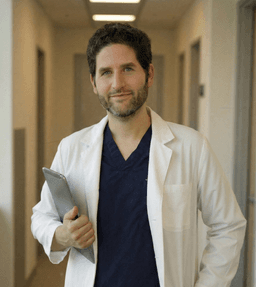
M.D., Dermatologic Surgery & Mohs Specialist, ACMS Fellow
Dr. Yehonatan Kaplan is a dermatology specialist with a US-trained fellowship in Mohs micrographic surgery and dermatologic oncology. He is a Fellow of the American College of Mohs Surgery (ACMS) and a member of the ASDS, with experience in over 6,000 Mohs procedures.
Medically reviewed on September 9, 2026
Related Articles
The Biopsy Site Has Healed: Do I Still Need Mohs Surgery?
A skin biopsy site can look clear while questions about further treatment remain. Understand the evidence and prepare useful documents and questions for your consultation.
Read More →Mohs SurgeryHow to Choose a Mohs Surgeon: What to Look For
A practical guide to evaluating Mohs surgeons, including the importance of fellowship training, the right questions to ask, board certification versus fellowship distinctions, and how to navigate the referral process in Israel.
Read More →Mohs SurgeryWhy Mohs Surgery Has a 99% Cure Rate: The Science Explained
Mohs surgery achieves a 99% cure rate for basal cell carcinoma, significantly higher than any other treatment method. This article explains the scientific principles behind this exceptional success rate, including real-time margin analysis and complete tissue examination.
Read More →