The Practice in Numbers: Updated Mohs Surgery Data (September 2026)

The Numbers, as of September 2026
- 6,000+ Mohs procedures performed by Dr. Kaplan over his career
- 1,000+ of them as primary surgeon during his ACMS-accredited fellowship in Miami
- 100% of the surgical margin is examined under the microscope in Mohs surgery, versus roughly 1-2% in standard excision
- Up to 99% cure for primary BCC and about 94% for recurrent tumors, per the published literature
- 30-45 minutes per removal-and-examination cycle, with 1-3 cycles needed in most cases
Why Publish Numbers?
When a patient chooses a Mohs surgeon, they usually encounter general phrases: "extensive experience", "unique expertise", "thousands of satisfied patients". It is hard to base a decision on those. This page does something different: it presents the numbers themselves, explains what each one means (and what it does not mean), and points to external sources where they can be verified.
The page is updated quarterly. The date of the last update appears at the top.
“A patient choosing a surgeon should not have to settle for 'extensive experience'. Precise numbers, verifiable against external professional bodies, are the basic form of respect owed to someone entrusting you with their face.”
Experience in Numbers
Over 6,000 Mohs procedures. This is the cumulative number of procedures Dr. Kaplan has performed, as of September 2026. Behind the number stands variety: primary and recurrent tumors, complex anatomic sites (nose, eyelids, ears, lips), and a full range of reconstruction techniques, from direct closure to local flaps and skin grafts. The figure also appears on Dr. Kaplan's official profile in the practitioner directory of the European Society for Micrographic Surgery (source 2 below).
Over 1,000 procedures as primary surgeon during fellowship. During his American College of Mohs Surgery accredited fellowship year at Skin and Cancer Associates / Mount Sinai Medical Center, Miami Beach (2022-2023), Dr. Kaplan performed over 1,000 Mohs procedures as primary surgeon under supervision. The ACMS fellowship is the field's structured, supervised training pathway, and Dr. Kaplan's Fellow profile appears in the College's official directory (source 1 below).
The Numbers of the Technique Itself
100% of the margin is examined. In Mohs surgery, the tissue is sectioned in a way that allows microscopic examination of the entire margin, both peripheral and deep. In standard excision, where tissue is sent to an external laboratory, only representative slices are examined, typically covering about 1-2% of the margin surface. That structural difference explains the gap in cure rates.
Up to 99% cure for primary BCC. According to the field's most cited literature, the long-term cure rate of Mohs surgery for primary BCC reaches about 99%, and about 94% for recurrent tumors (sources 3-4). These are the technique's figures from the medical research, not any single clinic's personal statistics.
30-45 minutes per cycle, 1-3 cycles in most cases. Each round of layer removal, on-site laboratory processing, and microscopic examination takes about 30-45 minutes, with the patient waiting comfortably between rounds. Most procedures require one to three rounds for complete removal.
What the Numbers Do Not Say
This needs saying just as clearly: no number on this page is a guarantee of outcome for your individual case. Every tumor differs in type, size, location, and history, and every patient differs in health. Cure rates come from studies of large populations; they describe the technique, not a single case. At the consultation, Dr. Kaplan explains what the data means for your specific situation, including the alternatives.
How the Numbers Are Collected and When They Update
The procedure count is based on the case log Dr. Kaplan maintains routinely, in line with ACMS standards. The technique data comes from the professional literature cited in the sources. The page is updated quarterly, and the date of the last update appears at its top.
Want to understand how these numbers meet your own case? Start with the Mohs surgery page, the guide on how to choose a Mohs surgeon, or the results gallery.
Sources & References
- American College of Mohs Surgery, Find a Surgeon: Yehonatan Kaplan, MD. [Link]
- European Society for Micrographic Surgery, Practitioner Directory: Yehonatan Kaplan. [Link]
- Rowe DE, Carroll RJ, Day CL. Long-term recurrence rates in previously untreated (primary) basal cell carcinoma. [Link]
- Rowe DE, Carroll RJ, Day CL. Mohs surgery is the treatment of choice for recurrent (previously treated) basal cell carcinoma. [Link]
- StatPearls: Mohs Micrographic Surgery. [Link]
Medical Disclaimer
This article is for informational purposes only and does not constitute medical advice. Always consult a qualified dermatologist for diagnosis and treatment. The information provided should not be used for self-diagnosis or as a substitute for professional medical care.
About the Author
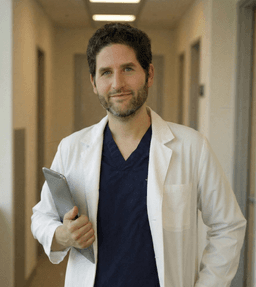
M.D., Dermatologic Surgery & Mohs Specialist, ACMS Fellow
Dr. Yehonatan Kaplan is a dermatology specialist with a US-trained fellowship in Mohs micrographic surgery and dermatologic oncology. He is a Fellow of the American College of Mohs Surgery (ACMS) and a member of the ASDS, with experience in over 6,000 Mohs procedures.
Medically reviewed on September 1, 2026
Related Articles
AI in Mohs Surgery: How Technology Is Improving Surgical Outcomes for Patients
Artificial intelligence is beginning to transform Mohs micrographic surgery. From faster frozen section analysis to more precise tumor margin detection, learn how AI tools are helping surgeons achieve better outcomes while reducing procedure time for patients.
Read More →Mohs SurgeryWhat you are agreeing to before Mohs surgery
A consent form lists everything that could happen, however rare. In a study of 20,821 Mohs procedures, any adverse event occurred in 0.72% of cases. Here is what the form says, in plain language.
Read More →Mohs SurgeryHow to Choose a Mohs Surgeon: What to Look For
A practical guide to evaluating Mohs surgeons, including the importance of fellowship training, the right questions to ask, board certification versus fellowship distinctions, and how to navigate the referral process in Israel.
Read More →